
A common misconception is that a cross-chain swap is simply a larger version of an ordinary token swap. It is not. When assets move from Ethereum to Arbitrum, or from one ecosystem to another, the user may be approving tokens, interacting with a bridge or liquidity router, waiting for a message to settle, and then receiving a different asset on a second network. Several separate trust and execution assumptions are bundled into one familiar-looking button. The practical consequence is easy to miss: a wallet can simulate one step clearly while the overall journey still contains risks that no single preview can eliminate.
Consider a US-based DeFi user who wants to move stablecoins from Ethereum to another network before buying an asset. They install a browser wallet, connect to a swap application, choose the source and destination chains, and inspect the quoted output. The interface feels routine. Yet the important question is not only “How much will I receive?” It is also “What exactly will my wallet authorize, which contracts will act, and what happens if one part of the route behaves differently than expected?” That is where transaction simulation becomes a security practice rather than a decorative feature.
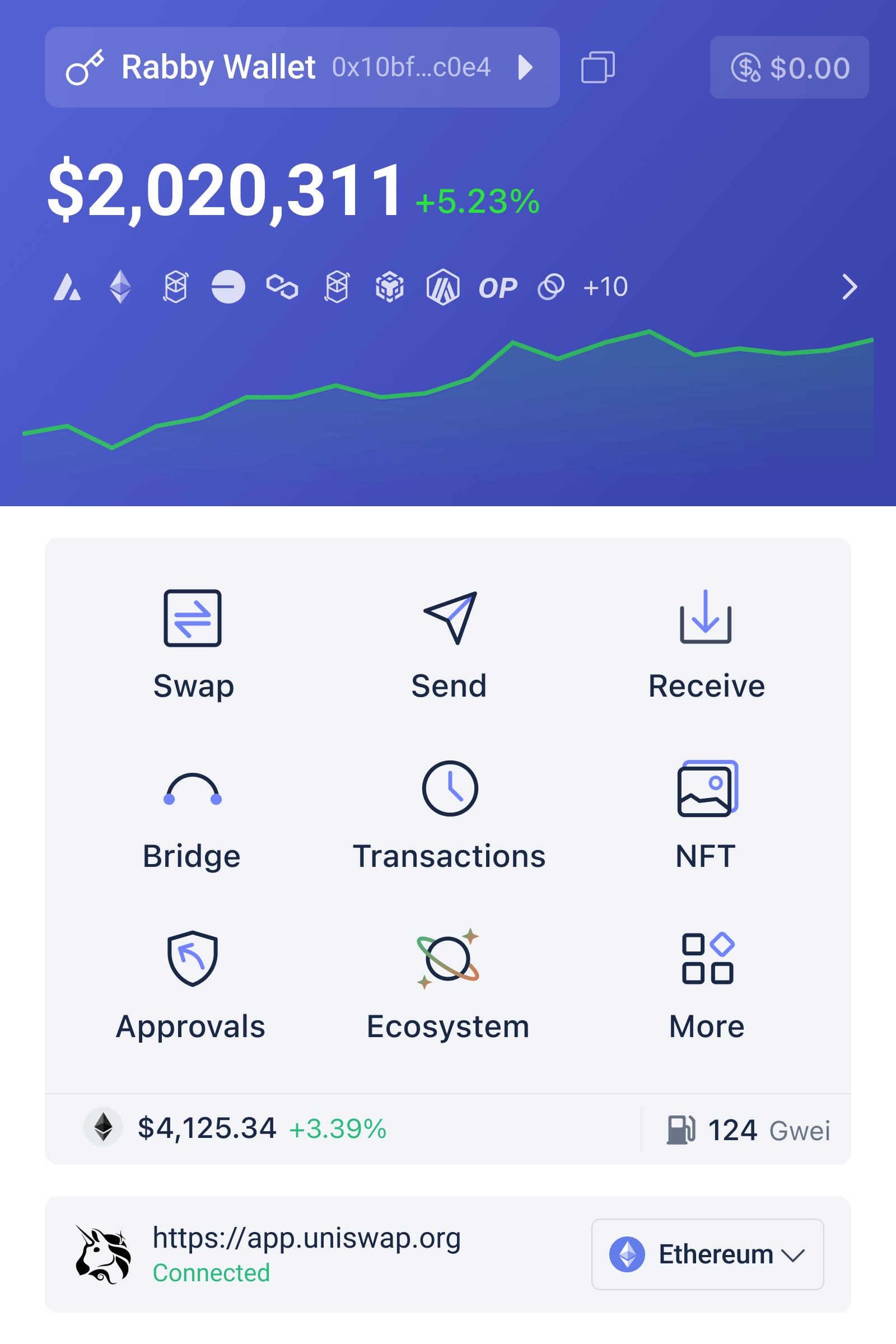
The hidden structure of a cross-chain swap
An ordinary decentralized exchange swap usually occurs within one blockchain. A smart contract receives one token and attempts to return another, subject to price movement, liquidity, fees, and slippage limits. A cross-chain swap adds a communication problem: the source network and destination network do not share a single native transaction state. A bridge, messaging system, liquidity provider, or routing service must coordinate the movement or representation of value across both environments.
That coordination can take different forms. A bridge may lock or burn an asset on the source chain and release or mint a corresponding representation on the destination chain. A liquidity-based system may pay the user on the destination chain from available inventory while settling the source-side transfer later. A multi-step router may combine a bridge with a swap, a token approval, and a destination-chain action. These designs have different failure modes, even when the user sees the same basic flow: select networks, select tokens, and confirm.
This distinction produces a useful mental model: a cross-chain swap is a sequence of state changes, not a single promise of delivery. The displayed quote describes an intended route. It does not by itself prove that every contract involved is safe, that the destination token is the one the user expects, or that the route will remain available until completion. A transaction preview can expose important details, but it cannot convert an unfamiliar protocol into a risk-free one.
What transaction simulation can—and cannot—tell you
Transaction simulation estimates what may happen if a transaction is executed against a particular blockchain state. Depending on the wallet and the action, a simulation may reveal the tokens leaving the wallet, assets expected in return, approvals being granted, contract interactions, probable gas requirements, and whether the call is likely to revert. This is valuable because raw transaction data is difficult for most users to interpret. Instead of seeing only a contract address and a function name, the user may receive a more human-readable account of the proposed effects.
For the case above, simulation can help answer several immediate questions. Is the wallet spending the intended stablecoin? Is the approval limited to a reasonable amount or effectively unlimited? Is the destination action attempting to transfer an unexpected token? Does the call fail before funds move? Are there warnings about a contract or an asset that the user did not deliberately select? A suspicious mismatch between the user’s intention and the simulated result is a reason to stop, not a problem to click through.
But simulation has a boundary condition that deserves more attention: it is conditional on the state and assumptions available when it runs. Blockchain state can change between simulation and mining. Liquidity may move, a quote may expire, a block-dependent condition may change, or a destination message may later be handled by a separate contract. A simulation may also fail to model every off-chain component, interface compromise, validator assumption, or economic incentive in a cross-chain system. “Simulation succeeded” means the proposed call appears executable under the tested conditions. It does not mean the protocol is solvent, honest, decentralized, or immune to a later failure.
There is another subtle distinction between execution risk and authorization risk. A transaction can execute exactly as encoded and still be dangerous if the user unknowingly approved a malicious spender. Conversely, a legitimate transaction can revert because the quote is stale or the destination conditions changed. Simulation is strongest at identifying likely effects and inconsistencies; it is weaker as a complete judgment about protocol quality. The user still has to verify the application, chain, token contract, recipient details, and economic terms.
Installing a wallet is part of the security model
Security begins before the first swap. A browser extension should be obtained through a trustworthy route, and users should check the extension’s identity rather than relying on a sponsored search result, a social-media post, or a copied link. For readers who are evaluating the process, this rabby extension download resource can serve as a starting point for reviewing the installation path. The principle is broader than any one wallet: verify the source, inspect permissions, and treat the seed phrase or private key as the root credential that must never be entered into a website, chat, or support form.
A separate browser profile can reduce confusion between personal browsing and high-value wallet activity, although it is not a complete defense against malicious extensions or compromised websites. Hardware-wallet users should also remember that a hardware device protects key custody; it does not automatically make a transaction safe. If the user confirms a harmful approval or signs a deceptive message, strong key storage may prevent theft of the key itself while still allowing the authorized action to cause loss.
For a first cross-chain transfer, a conservative workflow is more useful than a hurried search for the lowest quoted fee. Confirm the source network and destination network, inspect the exact token on both sides, review the spender and recipient, read the simulated asset changes, and check the approval amount. Keep enough native gas token on the relevant network for follow-up actions. If the route involves a bridge, understand whether the user is waiting for a message, receiving a wrapped representation, or being paid from a liquidity pool. A small test transaction can reduce operational uncertainty, though it cannot prove that a protocol will remain safe later.
Risk management is about reducing ambiguity
The most practical framework is to separate four questions that interfaces often compress into one confirmation screen. First, custody: who controls the signing key, and where is it stored? Second, authorization: which contract is allowed to move which asset, and for how much? Third, execution: what does the transaction appear likely to do on the current chain state? Fourth, system dependency: what bridge, relayer, validator set, liquidity pool, or destination contract must work afterward?
This framework explains why a favorable price can be misleading. A route with lower visible fees may rely on a more complex set of contracts or thinner destination liquidity. A route with a familiar token may deliver a bridged representation that has different redemption or liquidity assumptions. A transaction that costs less gas may leave the user without enough native currency to complete the next step. The right comparison is therefore not simply output minus fee. It is expected utility after considering execution probability, recovery options, delay, contract exposure, and the value of mistakes.
Users should be particularly cautious with unlimited approvals, permit-style signatures, unfamiliar tokens, and requests to disable protective warnings. An approval is not the swap itself; it is permission that may remain usable until revoked or consumed. A signature that does not look like a normal transaction can still authorize an action, depending on the protocol and message format. If the wallet preview and the application’s explanation disagree, the disagreement is itself information. Stop and investigate rather than assuming the interface knows best.
What to watch as cross-chain design evolves
The likely direction of better wallet UX is not merely more colorful warnings. More useful systems would connect simulation with route transparency: showing each meaningful stage, identifying the parties or contracts involved, distinguishing source-chain completion from destination-chain settlement, and explaining what the user receives if a route partially fails. Conditional on reliable data and broad protocol integration, that kind of presentation could make cross-chain activity more understandable for non-specialists.
The unresolved issue is that no wallet preview can settle every question about a cross-chain system. Users and developers still have to reason about governance, upgrade keys, bridge security, liquidity concentration, message verification, and the possibility that a destination asset behaves differently from its name or logo. As interoperability grows, the most valuable signal may be the quality of the explanation around a route, not the confidence of its marketing. A clear warning about uncertainty is more useful than a promise that every transfer is seamless.
Return to the original stablecoin example. The safer user is not the one who memorizes every protocol or never takes a risk. It is the one who decomposes the action: identify the chain, identify the contract, inspect the authorization, simulate the expected effects, and understand what remains outside the simulation. That habit turns a cross-chain swap from a mysterious button into a sequence of decisions that can be questioned before money is committed.
Frequently asked questions
Does transaction simulation guarantee that a cross-chain swap is safe?
No. Simulation can reveal likely transaction effects and possible failures under particular conditions. It cannot guarantee the safety of the protocol, the integrity of the website, the solvency of a bridge, the behavior of a destination-chain component, or the absence of later state changes. Treat it as a powerful review layer, not a security guarantee.
Why can a cross-chain swap require more than one confirmation?
The source-chain action may authorize a token transfer or initiate a bridge message, while a later destination-chain action completes delivery or swaps the received asset. These are separate state changes involving different networks. More confirmations do not automatically mean something is wrong, but each request should be understood before it is signed.
What should I do if the simulated result differs from the quote?
Do not confirm immediately. Check the selected networks, token contracts, spender, recipient, slippage settings, and approval amount. The difference may reflect a stale quote or a multi-step route, but it may also indicate a compromised interface or an unintended action. If the explanation remains unclear, cancel and investigate through an independently verified source.